
Choosing among the top Injection Molding Nitrile Rubber manufacturers requires more than comparing prices or production volumes. Nitrile rubber behaves differently under heat, pressure, and repeated compression. A capable manufacturer should understand these changes before approving a mold design.
Polymer-processing expert Dr. James L. White offered a practical principle: “Processing history matters.” That short statement fits nitrile production remarkably well. Material batches, storage temperature, screw speed, and curing conditions can influence the final seal. Small details matter.
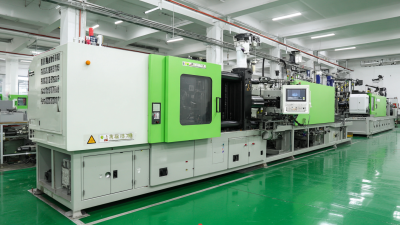
Strong suppliers usually provide traceable compound records, controlled molding parameters, and consistent inspection results. Look for evidence of ISO 9001 quality systems, dimensional testing, hardness testing, and tensile-performance checks. Ask whether the factory monitors flash, surface defects, mold temperature, and part weight during production. A photograph of a clean molding cell can be useful, but it proves little alone.
Experience also appears in small engineering decisions. A manufacturer may recommend a revised gate location to reduce air traps. It may adjust injection pressure when thin sealing lips show incomplete filling. These actions reveal practical knowledge, not just sales language.
The comparison is not perfect. Some suppliers publish impressive equipment lists but provide limited process data. Others offer excellent prototypes yet struggle with stable high-volume production. Therefore, this guide will examine manufacturers through technical capability, material consistency, testing discipline, communication, and delivery reliability. The best partner is rarely the cheapest option. It is the supplier that can repeatedly produce the same dependable nitrile component, batch after batch.
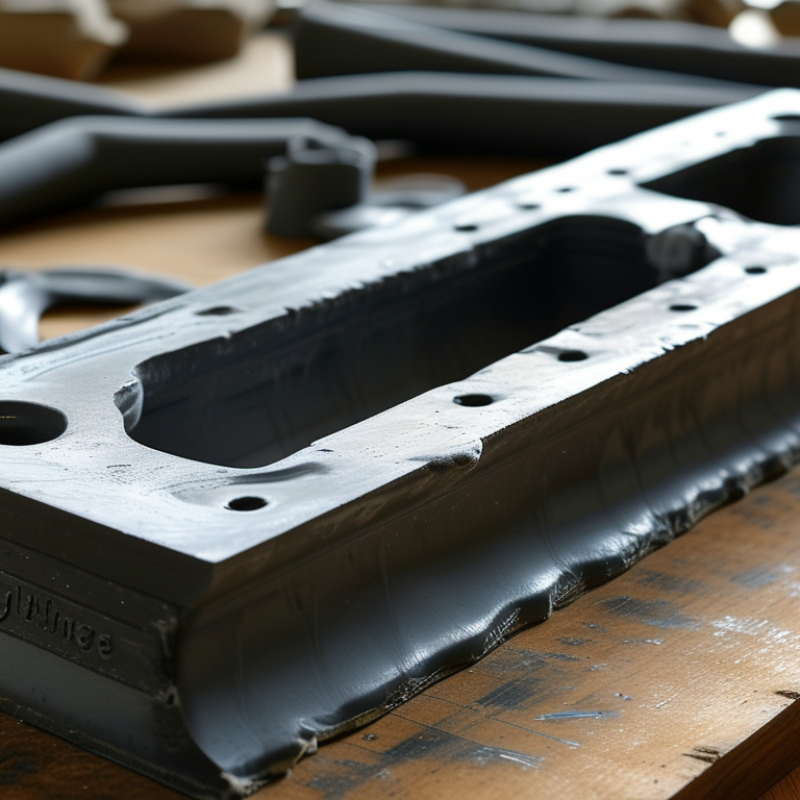
Injection-molded nitrile rubber is a shaped elastomer produced by injecting uncured NBR compound into a heated mold. NBR combines acrylonitrile and butadiene, creating useful resistance to oils, fuels, and abrasion. During molding, controlled heat and pressure cure the compound inside the cavity. The result is a precise part with consistent dimensions and clean edges. Common examples include seals, gaskets, diaphragms, and protective boots. Small details matter.
Experienced manufacturers adjust injection pressure, mold temperature, curing time, and compound hardness for each design. A seal used near hydraulic oil may need different acrylonitrile content than a flexible laboratory gasket. Material testing should check hardness, tensile strength, compression set, and resistance to the intended fluid. Visual inspection also helps identify air traps, flash, surface cracks, or incomplete filling. Nitrile rubber performs well, but it is not ideal for every environment. Heat, ozone, and sunlight can shorten its service life. One overlooked factor can change the result.
Tips: Request traceable material data and test records. Confirm tolerances before tooling begins. Review the actual operating temperature, pressure, and fluid exposure. A prototype can reveal weaknesses early. Even careful specifications may need revision after testing.
How should buyers evaluate nitrile rubber manufacturers? Start with evidence, not polished brochures. Grand View Research estimates the global nitrile butadiene rubber market reached about US$2.4 billion in 2023. Its forecast also indicates roughly 6% annual growth through 2030. MarketsandMarkets reports a similar expansion trend, though market estimates differ. That difference matters. Forecasts are not guarantees.
Check whether the manufacturer controls compound formulation, mold design, and curing parameters in-house. Request batch traceability, rheometer curves, hardness results, tensile strength, compression set, and aging data. ASTM D2000 provides a useful framework for classifying rubber performance. ISO 9001 certification supports process discipline, but it does not prove product suitability. Ask for recent audit findings and corrective-action records.
Inspect the production floor remotely or in person. Look for clean material storage, calibrated testing equipment, and documented mold maintenance. Review samples after heat, oil, and repeated compression exposure. A good supplier should explain failure limits clearly. Vague answers are warning signs. Delivery data also deserves attention. Compare quoted lead times with the previous twelve months of on-time performance, scrap rates, and complaint records.
Cost can mislead. A cheaper compound may create flash, odor, dimensional drift, or early cracking. Pilot molding reduces that risk. Still, one successful trial is not enough. Temperature, cavity balance, and operator settings can hide weaknesses. The evaluation should include production-scale validation, independent testing, and a written change-notification process. Even careful assessments can miss problems. That is why supplier approval should remain active, not permanent.
Leading manufacturers of injection-molded nitrile components are judged by process control, not production volume alone. They compound nitrile-butadiene rubber for oil resistance, then mold seals, grommets, diaphragms, and vibration parts. These components often work inside pumps, engines, valves, and industrial fluid systems.
Industry data supports continued demand. Grand View Research estimated the global nitrile butadiene rubber market at approximately USD 2.6 billion in 2023, with steady growth expected through 2030. A 2024 MarketsandMarkets report also identified automotive, industrial, and medical applications as major demand areas. However, market forecasts differ. That matters when planning capacity.
Reliable manufacturers should show documented compound traceability, mold-flow experience, and batch-level testing. Look for tensile strength, elongation, hardness, compression set, and volume-change results after oil exposure.
A capable supplier can maintain tight flash control around a small sealing lip. It should also explain how it manages mold temperature, injection pressure, curing time, and post-curing.
Ask for real production evidence. Sample inspection reports are useful. So are dimensional studies from optical measurement systems. ISO 9001-based quality systems improve consistency, while application-specific validation remains essential. In practice, a component may pass laboratory testing but fail after repeated heat and chemical cycling. I have seen specifications that looked complete, yet ignored installation force. That gap deserves attention.
Leading injection molding nitrile rubber manufacturers rely on controlled material preparation and repeatable process settings. Nitrile rubber compounds are blended with carefully selected fillers, plasticizers, sulfur systems, and accelerators. The formulation must balance oil resistance, elasticity, hardness, and compression set. Small weighing errors can create large performance changes.
Preheating improves flow before injection. A servo-controlled injection unit then pushes the compound through a heated runner or cold-runner system. Mold temperature must remain stable during filling and vulcanization. Sensors monitor pressure, cavity temperature, and curing time. Vacuum-assisted molding can reduce trapped air, especially around thin sealing lips and deep grooves. That detail matters.
Simulation software helps predict flow hesitation, weld lines, and uneven shrinkage. However, software cannot replace production trials. I have seen a theoretically balanced mold produce flash after compound viscosity changed. Imperfections remain possible. Operators therefore inspect first-off samples, measure dimensions, and test compression set after curing. Automated vision systems can detect surface defects, while hardness and tensile tests verify batch consistency. Post-curing may improve odor and stabilize physical properties, but it can also alter elasticity if the temperature is excessive. Careful documentation, calibrated instruments, and traceable batch records support reliable manufacturing decisions.
| Technology or Process Area | Typical Technical Data | Primary Function in NBR Injection Molding | Quality and Process Controls | Commonly Applicable Standards |
|---|---|---|---|---|
| Cold-Feed Injection Molding | Material is fed through a cold runner system; injection pressure is commonly controlled within approximately 80–200 MPa, depending on part geometry and compound rheology. | Provides repeatable filling of complex cavities while reducing manual preforming and material waste. | Monitored injection pressure, screw position, fill time, mold temperature, and shot weight. | ISO 20457; ISO 23936-2 where petroleum-related service is involved. |
| Compression and Vulcanization Control | NBR injection molding commonly uses mold temperatures around 160–200°C, with cure time determined by compound formulation, section thickness, and rheometer data. | Converts the uncured compound into an elastic, dimensionally stable product through cross-linking. | Cure curves are evaluated for scorch time, optimum cure time, torque development, and reversion resistance. | ASTM D2084; ASTM D5289; ISO 6502-1. |
| Compound Formulation and Polymer Selection | NBR acrylonitrile content is commonly selected within approximately 18–50%; higher acrylonitrile content generally improves oil resistance but reduces low-temperature flexibility. | Balances oil resistance, fuel compatibility, flexibility, hardness, tensile strength, and compression set. | Batch traceability, ingredient weighing, Mooney viscosity testing, and compound dispersion checks. | ASTM D1646; ISO 289-1; ISO 37. |
| Precision Mold Design | Typical design considerations include balanced runners, controlled venting, uniform cavity heating, suitable draft angles, and tolerances matched to elastomer shrinkage. | Improves cavity filling, reduces trapped air and flash, and supports consistent dimensional accuracy. | Mold-flow review, vent-depth control, cavity-to-cavity measurements, and preventive mold maintenance. | ISO 20457; ISO 3302-1 for rubber product tolerances. |
| Vacuum-Assisted Injection | Vacuum evacuation is applied before or during filling to remove air from the cavity; actual vacuum level depends on mold sealing and part design. | Reduces porosity, flow marks, scorch-related surface defects, and incomplete filling in intricate parts. | Vacuum response time, cavity pressure, vent cleanliness, and visual inspection of molded surfaces. | ISO 3302-1; customer-specific visual acceptance criteria. |
| Automated Deflashing and Finishing | Common methods include cryogenic deflashing, precision trimming, tumbling, and automated visual or camera inspection. | Removes flash and improves appearance without damaging sealing surfaces or functional edges. | Flash height limits, edge inspection, surface cleanliness, and dimensional sampling. | ISO 3302-1; ASTM D395 where compression-set performance is specified. |
| In-Process Monitoring and Statistical Control | Critical variables typically include injection speed, pressure, mold temperature, cure time, cavity pressure, part weight, and hardness. | Detects process drift and improves repeatability across production batches and cavities. | SPC charts, gauge repeatability and reproducibility studies, first-article inspection, and batch release records. | ISO 9001; IATF 16949 for applicable automotive supply chains. |
| Performance and Validation Testing | Typical tests include hardness, tensile strength, elongation, compression set, fluid aging, low-temperature flexibility, and dimensional stability. | Confirms that molded NBR parts meet mechanical, thermal, sealing, and chemical-resistance requirements. | Test conditions are selected according to the application, service fluid, temperature, pressure, and expected lifetime. | ASTM D2240; ASTM D412; ASTM D395; ASTM D471; ISO 1817; ISO 815-1. |
Note: The numerical ranges shown are typical industry values for NBR injection molding. Actual settings must be established from the specific compound formulation, mold design, equipment, and product requirements.
Selecting the right nitrile rubber manufacturing partner requires more than comparing unit prices. Grand View Research reports steady growth in the global nitrile rubber market, driven by medical, automotive, and industrial demand. That growth makes production discipline increasingly important. A capable supplier should explain its compound formulation, injection pressure, curing window, and mold-maintenance plan clearly.
Ask for evidence, not promises. Review ISO 9001 certification, material batch traceability, and documented inspection procedures. For sealing parts, request test results for tensile strength, elongation, compression set, and oil resistance. ASTM D412, ASTM D395, and ASTM D471 are useful reference methods. A practical audit should include a production-floor visit. Check whether operators record barrel temperature, injection speed, and flash defects consistently. Small details matter.
MarketsandMarkets’ recent industry outlook places the nitrile butadiene rubber market on a continued growth path through 2028, although estimates vary by region and application. This uncertainty deserves attention. A supplier may show excellent samples but lack stable capacity during peak demand. Ask for monthly output, rejection rates, backup tooling plans, and corrective-action records. Request samples from different production batches. One batch is not proof. A low quotation can hide tooling delays, inconsistent cure levels, or expensive sorting work. I would also test the compound under real conditions, including heat, oil exposure, and repeated compression. Laboratory data helps, but field performance can still surprise you.
| Cookie | Duration | Description |
|---|---|---|
| cookielawinfo-checkbox-analytics | 11 months | This cookie is set by GDPR Cookie Consent plugin. The cookie is used to store the user consent for the cookies in the category "Analytics". |
| cookielawinfo-checkbox-functional | 11 months | The cookie is set by GDPR cookie consent to record the user consent for the cookies in the category "Functional". |
| cookielawinfo-checkbox-necessary | 11 months | This cookie is set by GDPR Cookie Consent plugin. The cookies is used to store the user consent for the cookies in the category "Necessary". |
| cookielawinfo-checkbox-others | 11 months | This cookie is set by GDPR Cookie Consent plugin. The cookie is used to store the user consent for the cookies in the category "Other. |
| cookielawinfo-checkbox-performance | 11 months | This cookie is set by GDPR Cookie Consent plugin. The cookie is used to store the user consent for the cookies in the category "Performance". |
| viewed_cookie_policy | 11 months | The cookie is set by the GDPR Cookie Consent plugin and is used to store whether or not user has consented to the use of cookies. It does not store any personal data. |
| Key Principles | Criteria |
| Environment |
|
| CSR Policies and Reporting |
|
| Social Investment Programmes |
|
| Key Principles | Criteria |
| Quality of Product |
|
| Quality of Factory |
|
| Quality of Management |
|
| Key Principles | Criteria |
| Monitoring and Control |
|
| Management |
|
| Key Principles | Criteria |
| Global Presence |
|
| Logistical Assets |
|
| Terminal Handling |
|
| Key Principles | Criteria |
|
Tapping and Field Latex |
|
|
Concentrated Latex Processing, Handling & Storage and Shipping |
|
|
Laboratory & Chemical Handling |
|
|
EHS Management System |
|
| Key Principles | Criteria |
|
Monitoring and Mitigating Key Impacts |
|
|
Social Responsibility |
|
|
Social Investment |
|
| Key Principles | Criteria |
|
Security Controls |
|
|
Security Certification |
|
| Key Principles | Criteria |
|
Quality of Raw Material |
|
|
Quality of Process |
|
|
Quality of Management |
|
| Key Principles | Criteria |
| Certified Team |
|
| Technical Expertise |
|
| Key Principles | Criteria |
| International Standards and Certification |
|
| Customised Products |
|
| Testing |
|
| Key Principles | Criteria |
| Security Controls |
|
| Security Certification |
|