What Are the Top Modern Walk In Wardrobe Ideas?
A modern walk-in wardrobe is no longer merely a storage room. It has become a practical dressing space, planning tool, and daily comfort zone. The best designs combine clear circulation, adjustable shelving, controlled lighting, and carefully measured storage. Small details matter. A shallow drawer can protect jewellery, while warm LED strips can reveal colours accurately before work.
Consumer demand supports this shift. The National Association of Home Builders’ What Home Buyers Really Want report identifies walk-in closets as a highly valued primary-bedroom feature. Houzz research also shows that homeowners increasingly invest in personalised storage during renovation projects. These findings suggest a useful direction: buyers want convenience, but they also expect visual quality and long-term flexibility. Still, statistics cannot decide whether glass doors, open rails, or solid cabinetry suit your household.
Lisa Adams, founder of LA Closet Design, has described the closet as “the most important room in the house.” Her view reflects practical experience with luxury residential wardrobes. A well-planned modern walk-in wardrobe should make dressing faster, not create another room to maintain. That distinction is easy to miss.
This guide examines leading ideas, including island storage, hidden laundry sections, integrated seating, sensor lighting, and sustainable materials. It will also question popular choices. Open shelving looks attractive, but it can expose clutter and increase dust. A dramatic island may waste valuable floor space. The right solution depends on clothing volume, routines, room dimensions, and future needs. No plan is perfect. Careful measurement, honest self-assessment, and professional installation remain essential.
What Defines a Modern Walk-In Wardrobe?
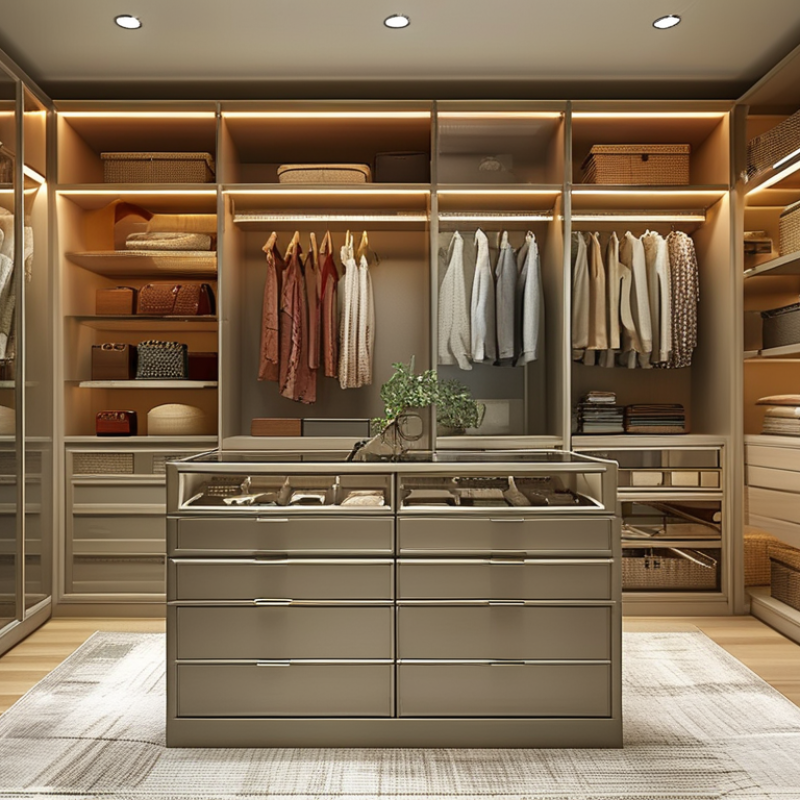
A modern walk-in wardrobe is defined by practical movement, not decoration alone. It should make dressing easier, faster, and less stressful each morning. Clear zoning separates daily clothes, formal pieces, shoes, and accessories. Open shelves keep frequently used items visible, while drawers protect smaller belongings from dust. A hanging section around 600 millimetres deep usually supports standard garments comfortably. Aisles should feel generous enough to turn without hitting doors or handles.
Lighting also shapes the room’s modern character. Use layered lighting with ceiling fixtures, shelf illumination, and soft light near a mirror. Neutral colour surfaces can improve visibility, especially inside deep cabinets. Good ventilation matters too. It reduces stale smells and helps protect fabrics in humid conditions. Durable boards, strong hinges, and carefully finished edges support long-term use. These details are less exciting than elegant handles, but they influence daily reliability.
A built-in seat can make dressing more comfortable. Add a small bench, a full-length mirror, and one reachable laundry basket. Keep everyday storage between waist and eye level. Higher areas can hold seasonal items, although a stable step stool is essential. Smart lighting or sensor-controlled drawers may be useful, but technology should not complicate simple routines. In real homes, storage plans sometimes look perfect but feel crowded after a month. That is worth admitting. Leave some empty space for future clothes, changing habits, and imperfect folding. A modern wardrobe should adapt quietly as its owner’s needs change.
What Defines a Modern Walk-In Wardrobe?
Typical residential planning dimensions for comfortable circulation, accessible storage, and efficient vertical organization
A modern walk-in wardrobe combines clear movement paths with smart use of vertical space. A passage of about 91 cm supports comfortable access, while approximately 107 cm around a central island allows drawers and doors to open more easily. Shelves around 36 cm deep keep folded clothing visible and reachable, while double-hanging rails and long-hang storage maximize capacity.
Measurements are typical residential wardrobe-planning guidelines shown in centimetres; actual requirements vary with room layout, door swings, and user needs.
Which Materials, Colors, and Finishes Create a Modern Look?
Modern walk-in wardrobes work best when materials feel calm, durable, and easy to maintain. Flat-panel doors in matte lacquer create a clean architectural line. Natural oak or walnut veneer adds warmth without visual clutter. Houzz’s 2023 U.S. Kitchen Trends Study reported white as the most common cabinet color, chosen by 41% of homeowners. That preference translates well to wardrobes, especially in smaller rooms. However, pure white can feel cold under strong lighting. Soft ivory, greige, and muted taupe often feel more comfortable.
Finishes should support daily use, not just photographs. Super-matte surfaces hide fingerprints, while satin laminates are easier to wipe after contact with bags or shoes. Brushed metal handles add texture, but black hardware can become visually heavy. I prefer integrated pulls for a quieter appearance. The U.S. Department of Energy states that LED lighting uses at least 75% less energy and lasts up to 25 times longer than incandescent bulbs. Use warm-white LEDs around 2700–3000K under shelves and inside drawers. Too much brightness feels harsh.
A wood-grain interior helps exposed clothing feel less clinical. Yet, darker finishes can reduce visibility. This is easy to underestimate. Include adjustable shelves, ventilated sections, and soft-close drawers. These details improve real-world use more than decorative panels. Houzz data describes kitchen decisions, not wardrobes, so the comparison has limits. Local daylight, humidity, and cleaning habits should shape the final material choice.
How to Integrate Lighting, Mirrors, and Smart Features
A modern walk-in wardrobe works best when lighting supports daily routines, not just decoration. Use three layers: ceiling lights for general visibility, vertical lights for clothing, and softer illumination near the floor. Choose high-colour-rendering bulbs, ideally above 90, so fabric colours look accurate. A warm-neutral tone around 3000K usually feels comfortable. Very white light can make the room feel harsh.
Mirrors should reflect both the user and the storage layout. Place a full-length mirror near the dressing area, with light on both sides to reduce facial shadows. Backlighting can create a refined effect, but it may not provide enough light for styling. In one wardrobe plan, the mirror looked attractive at night but felt too dim during morning use. That mistake showed why appearance and function must be tested together.
Smart features can make small routines easier. Motion sensors may activate lights when drawers open, while dimming controls help during early mornings. A simple manual switch should remain available if the system fails. Avoid placing sensors where hanging clothes can block movement. Smart locks and connected cameras also require careful privacy decisions. Consult a qualified electrician for wiring, ventilation, and safe installation. Keep controls intuitive, because complicated settings quickly become unused. A wardrobe should feel calm, not like a control room.
How to Choose the Best Modern Wardrobe Design for Your Needs
Choosing a modern walk-in wardrobe starts with your daily routine, not a showroom photograph. Count hanging clothes, folded items, shoes, luggage, and accessories before selecting cabinetry. Measure wall length, ceiling height, door swing, and walking clearance carefully. A comfortable passage usually needs about 90 centimetres, while generous rooms can support wider circulation. If two people use the space, test the layout together with tape on the floor. Test it. This quickly reveals awkward corners and blocked doors.
For long coats and dresses, include tall hanging zones; shirts work better on shorter rails. Drawers keep watches, belts, and knitwear visible, while adjustable shelves handle changing storage needs. Open shelving feels spacious, but it exposes dust and visual clutter. Closed fronts create a calmer appearance and protect delicate fabrics from sunlight. Use layered lighting: ceiling light for general visibility, vertical illumination for faces, and soft cabinet lighting for detail. Colour and material should suit the room’s architecture, yet easy cleaning matters more than a temporary trend.
A professional designer should explain load limits, ventilation, hardware quality, and installation tolerances clearly. Ask for material samples in daylight and inspect drawer movement before approving the design. I would also leave spare capacity, because wardrobes often fill faster than expected. That choice may make the room look less dramatic today. It can prevent expensive alterations later. One mistake remains common: planning storage around an ideal lifestyle instead of real habits. Your worn shoes and frequently used jacket deserve the easiest access.